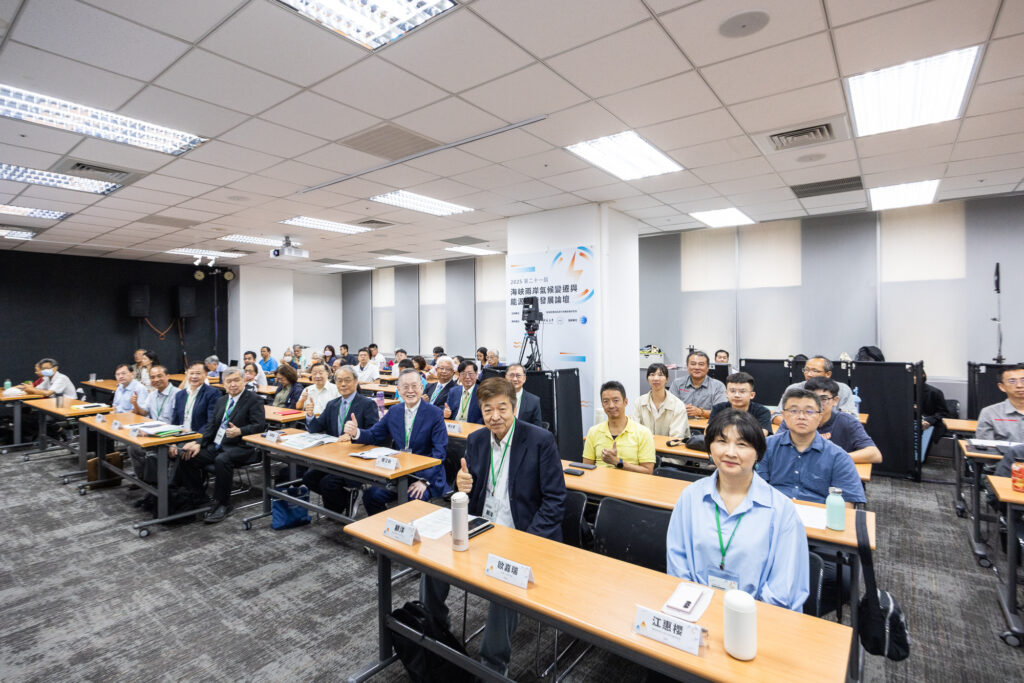
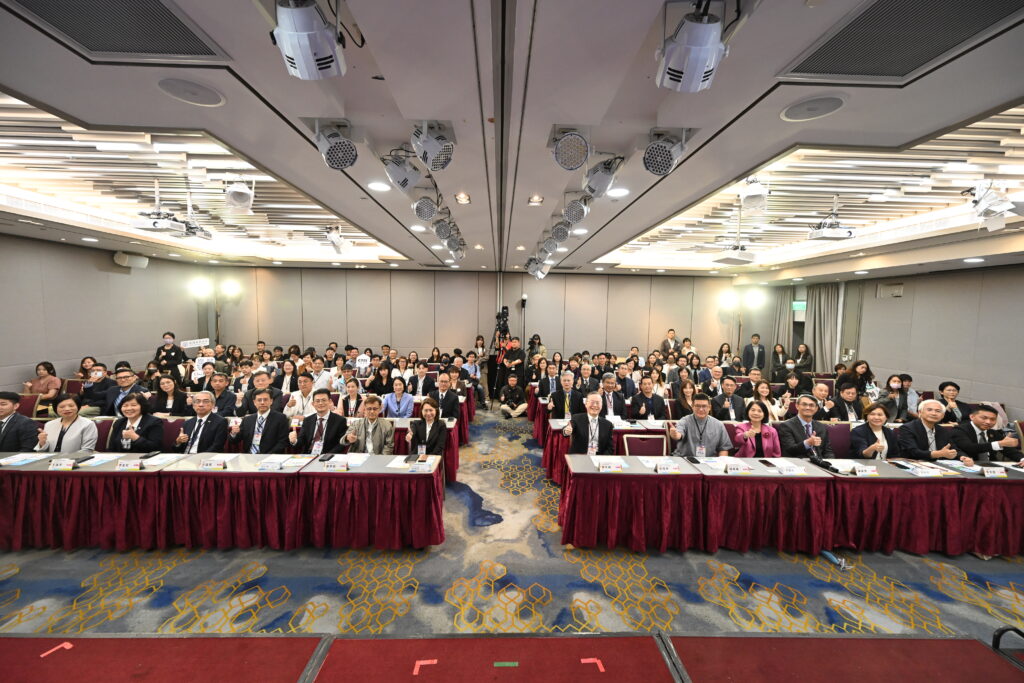
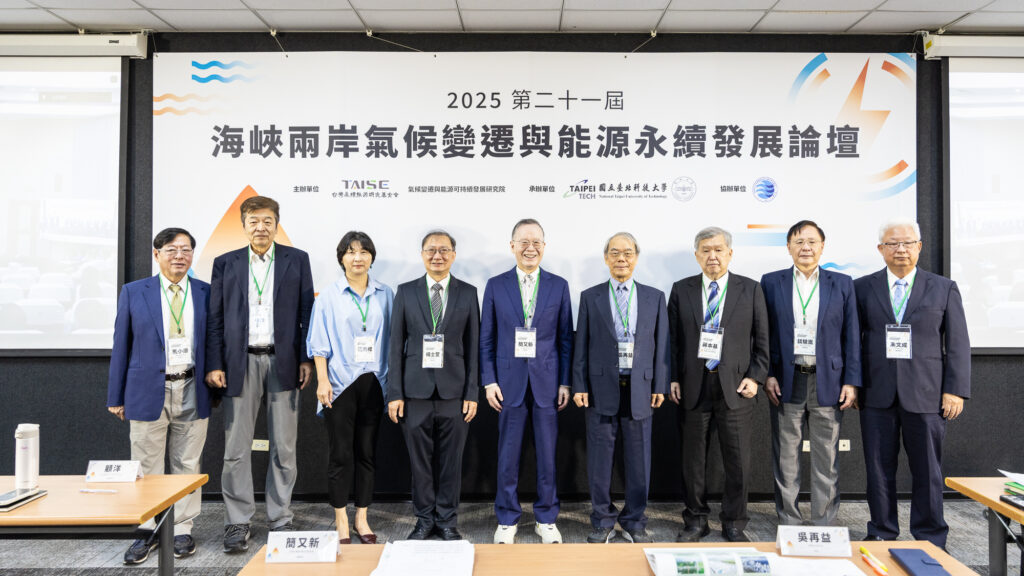

The 21st Cross-Strait Forum on Climate Change and Sustainable Energy Development was successfully held on September 19, 2025, attracting over 550 participants— including 150 onsite attendees and 207 online registrants from Taiwan, as well as more than 200 participants from mainland China. Since its inception, the forum has been a key platform for professional dialogue on energy and environmental cooperation across the Strait.
Key Themes and Discussions
Facing common challenges such as renewable intermittency and rising power demand from AI, both sides explored how to balance supply reliability with energy transition goals.
- Taiwan shared progress in energy efficiency, cooling technologies, time-of-use pricing, and storage mechanisms.
- Mainland China discussed grid flexibility for renewable integration and supply stability under long-term economic scenarios.
Policy and Technology Insights
Experts highlighted that most major economies, including Taiwan, have pledged net-zero by 2050, targeting 30% renewables by 2030 and a power emission factor of 0.319 kg CO₂/kWh.
Taiwan’s 2024 energy mix: 80% thermal (coal 31%, gas 47%, oil 1%), 4% nuclear, 12% renewables. Industrial use made up 55.2% of total demand. To tackle evening peak loads, integrated solutions such as time-of-use tariffs, pumped hydro, and 5.5 GW storage by 2030 were proposed. Hydrogen will follow a “local production, local use” model, while CCUS (Carbon Capture Utilisation and Storage) and floating offshore wind will advance through pilot projects and hybrid systems combining wind, wave, and solar.
Smart Grids and Energy Security
Smart grid innovation was showcased through AI-based forecasting, IoT integration, and virtual power plants (VPPs). Meteorological data fusion now supports 1 km real-time resolution and 30 m×30 m demo zones for precise grid management. In terms of supply security in Mainland China, Shandong Province serves as a case study showcasing a system solution that combines deep flexibility retrofits of coal-fired power with ultra-high-voltage (UHV) transmission for outbound and inbound power delivery, targeting a 25% non-fossil energy share by 2030.
Mainland examples, such as Shandong’s” Deep flexibility retrofit of coal-fired power + ultra-high-voltage (UHV) power transmission (export/import)” solution ; On the corporate side, virtual power plants (VPPs) and AI bidding engines enable peak–off-peak arbitrage and contract capacity optimization, with practical cases showing annual electricity cost savings of 12–15%, demonstrating how market tools enhance both reliability and decarbonization.
Green Innovation
Emerging technologies included biomass co-firing verification, hydrogen electrolysis (SOEC), waste heat recovery, and multi-mode thermal storage improving efficiency by about 30%.
Liquid Air Energy Storage (LAES) pilots reached 50 kW with 60% efficiency, and Solid-State Batteries (SSBs) drew attention for their 700 Wh/kg potential, though manufacturing challenges remain.
Cross-Strait Cooperation Framework
The forum concluded with a three-tier collaboration model:
- Demonstration: Joint pilots on storage, floating renewables, solid-state batteries, and grid defense.
- Financing: Milestone-based verification mechanisms to reduce investment risk.
- Standards: Mutual recognition of carbon accounting, data validation, and cyber-resilience protocols to accelerate commercialization.
Both sides recognized similar structural challenges and agreed that shared innovation and pragmatic cooperation are key to achieving sustainable progress.
Closing Remarks
Chairman Kechang Xie of the mainland side emphasized continuous reform to ensure the forum’s lasting relevance.
Taiwan Institute for Sustainable Energy Chairman Eugene Chien expressed gratitude, calling for mutual assistance and civic engagement toward long-term sustainability.
He concluded poetically:
“Experts from both sides gather as one,
Together we discuss the climate and the sun.
With green transition hand in hand,
We write a new chapter for our land.”
The forum reaffirmed its mission to turn cross-strait consensus into concrete climate action for a shared sustainable future.